
Shopping Cart
Introduction: Dressing the Altar with Beauty and Devotion
The Church’s liturgy is not only expressed through words, chants, and gestures: it is also clothed. Among all sacred vestments, the chasuble holds a central place as a symbol of Christ’s love that clothes the priest at the altar. However, not all chasubles are the same. There are specific styles, fabrics, colors, and embroideries for each liturgical season and celebration.
In this article, we focus on Marian chasubles, those used during Masses celebrated in honor of the Virgin Mary. Whether for patronal feasts, Marian celebrations in the liturgical calendar, or devotional occasions, these chasubles should be chosen with care, respect, and spiritual understanding.
We will help you understand which colors to use, which symbols to look for, and which details to consider when selecting a Marian chasuble for your parish, religious community, or chapel.
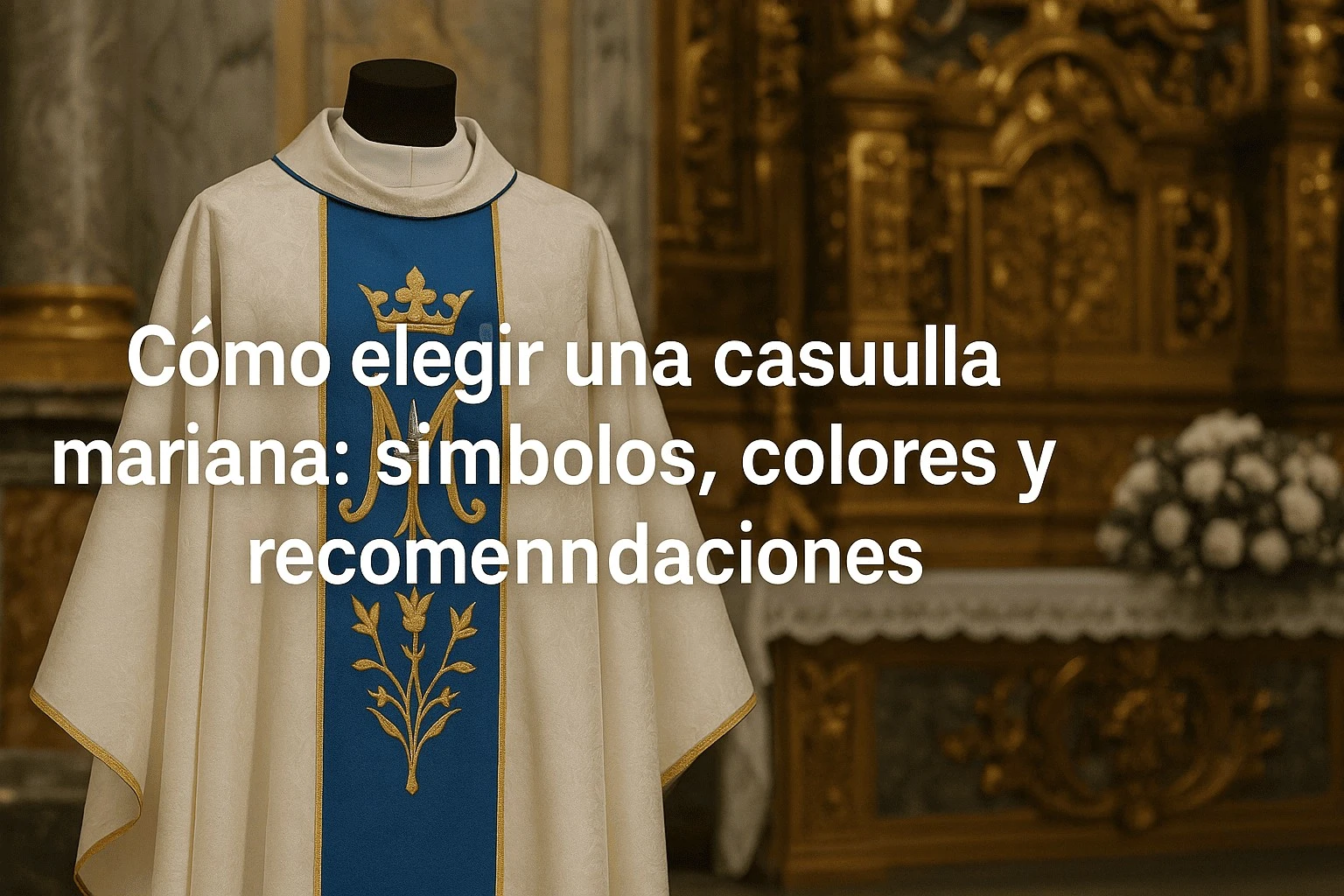
What Is a Chasuble and What Is Its Liturgical Function?
The chasuble is the outer vestment worn by the priest during the celebration of Mass. Its shape, which envelops the entire body, represents charity, the virtue that should cover all others.
A Brief Historical Overview
- In the early centuries, it was a common cloak that gradually evolved in both form and symbolism.
- Over time, different styles emerged: Roman, Gothic, Semi-Gothic, Monastic, and others.
- Today, the Church allows a variety of styles, provided they maintain proper liturgical dignity and reverence.
When Is a Marian Chasuble Used?
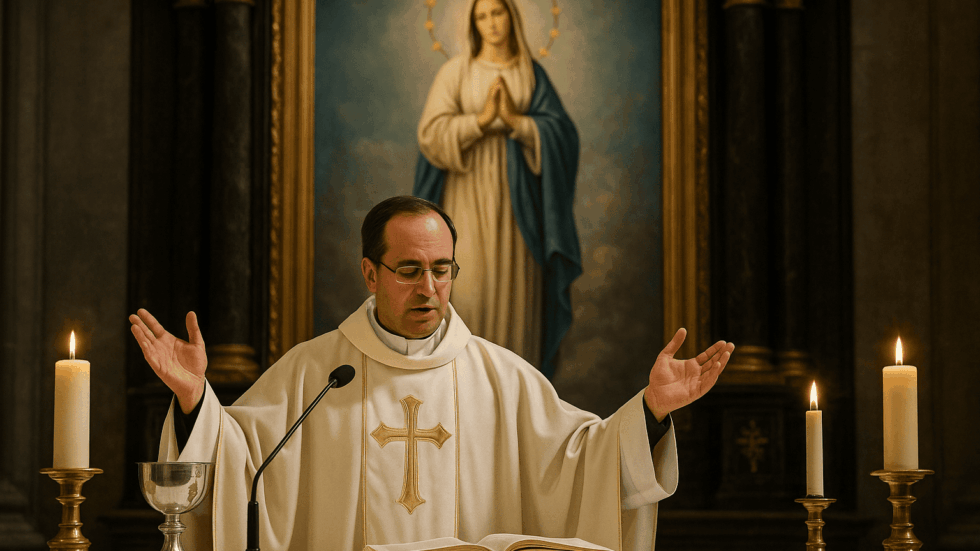
Marian Celebrations in the Liturgical Calendar
Marian chasubles are commonly used for celebrations such as:
- The Immaculate Conception (December 8)
- Our Lady of Mount Carmel (July 16)
- The Assumption of the Blessed Virgin Mary (August 15)
- The Nativity of the Blessed Virgin Mary (September 8)
- The Visitation (May 31)
- Our Lady of Fatima, Lourdes, Pilar, and other local Marian devotions
They may also be used during votive Masses in honor of the Virgin Mary or devotional occasions such as processions, novenas, and solemn Rosary celebrations.
Liturgical Colors Appropriate for Marian Celebrations
One of the most visible elements of a chasuble is its color, which carries deep symbolic meaning within the liturgy.
White: The Primary Marian Color
White symbolizes purity, light, and glory, qualities traditionally associated with the Blessed Virgin Mary. It is the most commonly used color for Marian feasts and the best choice if only one chasuble is available for Marian celebrations.
Blue: A Color with Special Tradition
Although blue is not among the standard liturgical colors of the Roman Missal, the Holy See has granted special privileges to certain nations and dioceses—particularly in Spain and countries with Hispanic traditions—to use it during Marian celebrations. Blue conveys tenderness, motherhood, and hope.
Gold or Ivory: For Solemn Celebrations
Gold and ivory may be used on major Marian solemnities. Their use communicates majesty, royalty, and festivity, making them especially appropriate for important celebrations in honor of the Mother of God.
Marian Symbolism in Embroidery
Beyond color, a Marian chasuble can be distinguished by its embroidered symbols, which express its dedication to the Blessed Virgin Mary.
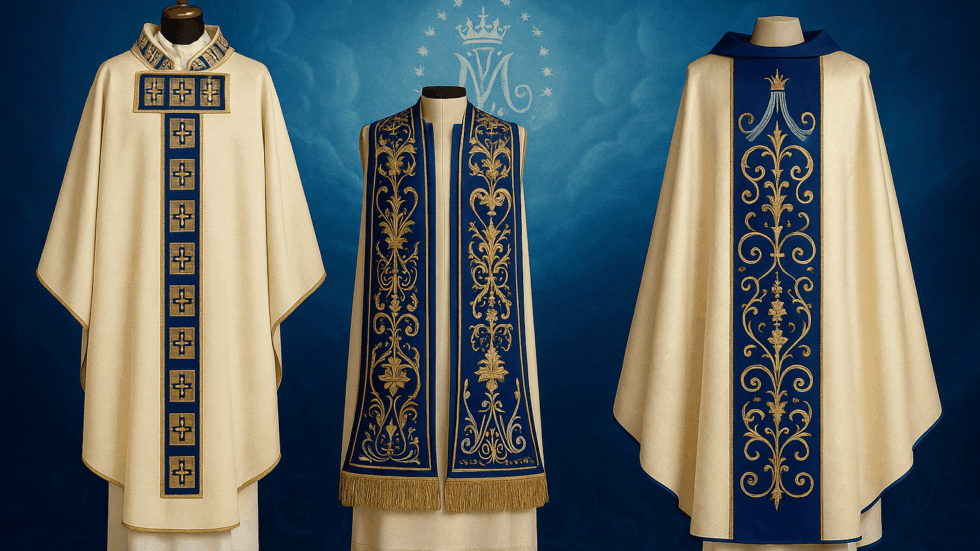
Common Marian Symbols
- The Crowned “M”: the initial of Mary crowned as Queen
- The Fleur-de-Lis: a symbol of virginal purity
- Stars: representing Mary as Stella Maris (Star of the Sea)
- The Ave Maria Monogram: the letters A and M intertwined
- The Immaculate Heart of Mary: often depicted with a sword, recalling Simeon’s prophecy
Scenes and Marian Images
- The Annunciation
- Mary with the Child Jesus
- The Assumption
- Marian Apparitions
These images, while more elaborate, can be beautifully represented through artistic embroidery or high-quality textile printing.
Recommended Fabrics and Styles
Types of Fabric
- Damask or Brocade: elegant and traditional
- Linen or Linen-Polyester Blends: lightweight and easy to maintain
- Textured Liturgical Fabrics: add solemnity and visual richness
Styles of Chasubles
- Gothic: wide, flowing, and comfortable. The most commonly used style today.
- Roman: more structured, often featuring decorative bands and front ornamentation.
- Semi-Gothic or French: a balance between Gothic and Roman styles.
- Monastic: simple and austere, ideal for religious communities.
The choice depends both on the liturgical sensibility of the community and the type of celebrations being held.
Details That Make the Difference
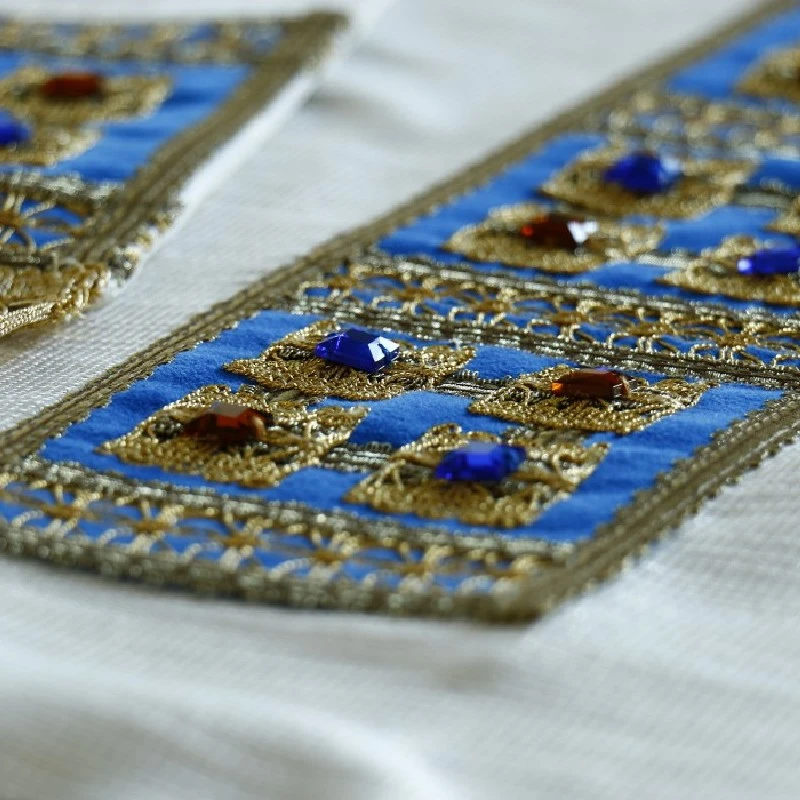
When choosing a Marian chasuble, it is important to consider several key details:
- The quality of the embroidery (machine-made or handcrafted)
- The type of inner lining, if included
- The symmetry of the design, especially when a central orphrey is present
- Whether a matching stole is included
- The possibility of customization (parish crest, specific Marian devotion, inscriptions, etc.)
A well-chosen chasuble is not only beautiful but also helps elevate the hearts and minds of the faithful during the celebration of the liturgy.
Conclusion: A Chasuble to Honor the Mother of God
Choosing a Marian chasuble is not merely an aesthetic or practical decision; it is an act of love and veneration. By wearing a chasuble dedicated to the Blessed Virgin Mary, the priest outwardly expresses an inner devotion, a commitment to the liturgy, and a spiritual guide for the faithful.
The beauty of the liturgy is enhanced when it is celebrated with artistry, faith, and symbolic meaning. As Mother of the Church, Mary deserves the very best of our worship: in our words, in our music, and also in the vestments that adorn the altar.